
Sheet R04 Revision 1 Checked 15 October 2026
Ethereum casino
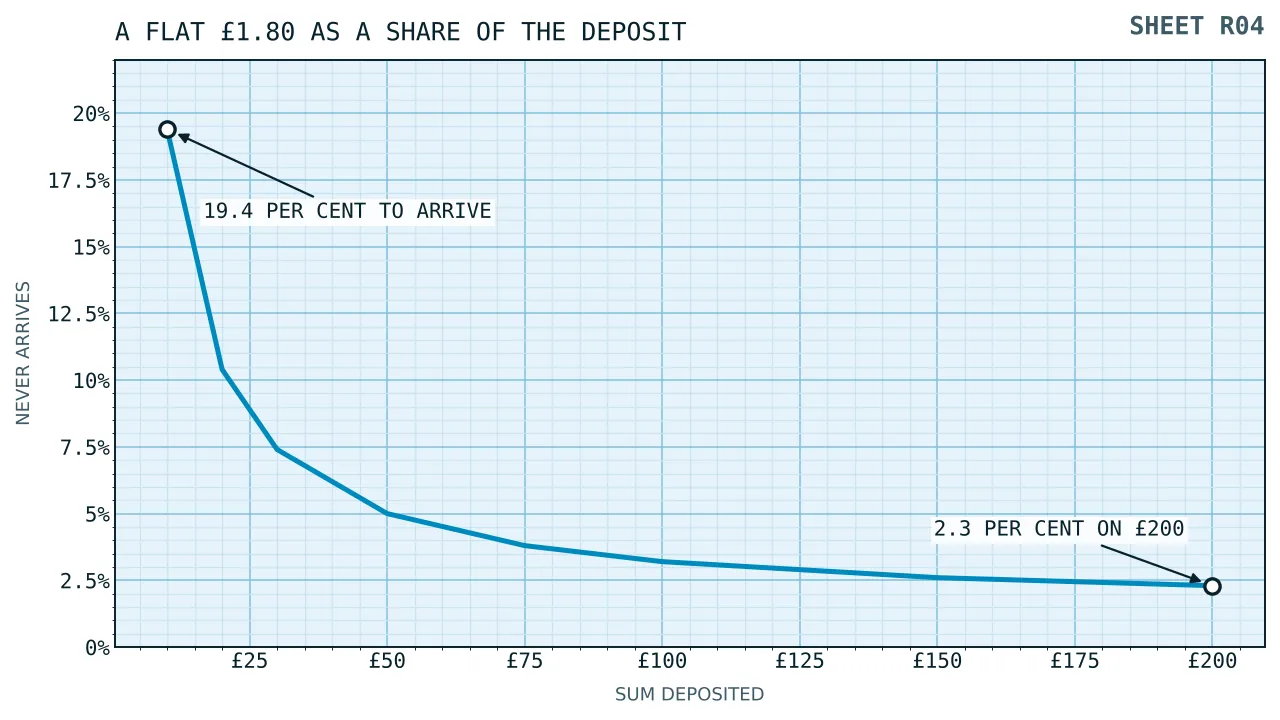
A flat £1.80 to carry a transfer is 18 per cent of a ten pound deposit and under one per cent of a two hundred pound one. Send £10.00 and £8.06 is credited. Match that in full, ask forty times for it, and the foot reads £0.00 before the exit has been paid for.
£1.94 of £10.00 never arrives, £1.80 of it a flat charge
What arrives, and what the terms then ask
Every destination on this spike is bought advertising. The site takes a fee if a reader goes on to register, and no figure printed below moves because of it.
The Spin Sheet
Till receipt No 01
Betportal
Lowest multiple here
For every €1 of spin credit at face per €1
Credit
Debit
No Great Britain licence
Licensed in Anjouan, Comoros, run by BetPortal Gaming Ltd, with Excite Ultra Media Ltd, reference ALSI-202601040-FI2.
Terms read 15 October 2026
Open the offer at Betportal, opens in a new tabThe Spin Sheet
Till receipt No 02
WinBeast
Five staged matches
For every €1 of spin credit at face per €1
Credit
Debit
No Great Britain licence
Licensed in Curaçao, operator not named on the site.
Terms read 15 October 2026
Open the offer at WinBeast, opens in a new tabThe Spin Sheet
Till receipt No 03
EliteSpin
Longest spin window
For every £1 of spin credit at face per £1
Credit
Debit
No Great Britain licence
Licensed in Costa Rica, run by PrimeTier Limited.
Terms read 15 October 2026
Open the offer at EliteSpin, opens in a new tabThe Spin Sheet
Till receipt No 04
Crown Jewelz
Multiple unpublished
No total struck
Credit
Debit
No Great Britain licence
Licensed in Curaçao, number not verified, operator not named on the site.
Terms read 15 October 2026
Open the offer at Crown Jewelz, opens in a new tabThe figure at the foot of a receipt is this site's own arithmetic and nothing an operator has published: the credit, less the share a spin gives back at 96 per cent return to player, less what playing the wagering through costs at the same return. It describes the offer, not one reader's afternoon. Where the conditions price above the credit the receipt prints nothing rather than a negative sum, and where a figure the sum needs is unpublished it prints the condition in the operator's words instead.
Three words stand in the amount column where no figure can. Noted is a published condition that takes value away without leaving the sum a figure to take. Unpriced is a condition whose figure nobody has published, or a credit that is not a sum until a deposit of your own sets it. Own money is money of yours, which is never part of a total.
Not one of the operators printed above holds a Great Britain licence, so the duties that licence carries do not reach them. Every online gambling company licensed in Great Britain has to be part of Gamstop Online, and a reader who has shut themselves out through the scheme is therefore not shut out here. The ceiling of ten times the bonus funds on a wagering requirement, in force since 19 January 2026, is a condition of that licence and binds the companies that hold one. Where a dispute goes instead is a matter for the authority named on the receipt, and the Gambling Commission describes what a reader faces without a British licence as a lack of recourse if things go wrong. Nobody under 18 may hold an account at any of them.
Every term printed on a receipt is the operator's own, and each receipt carries the day it was read. The oldest of those readings is 15 October 2026. What binds a reader is the operator's own full terms, and not a line printed here.
1
A charge that ignores the size of the transfer
Most things that cost money to move cost more when there is more of it. A network charge does not work that way. It is priced by the work of writing the transfer down, not by the value written, so the same charge falls on a transfer of ten pounds and a transfer of ten thousand.
That one property decides this whole sheet. A charge of £1.80 is 18 per cent of ten pounds, 3.6 per cent of fifty, 1.8 per cent of a hundred and 0.9 per cent of two hundred. Nothing about the cashier changes across that run of figures, nothing about the bonus changes, and the cost of arriving changes twentyfold.
Two charges are modelled on this page and both are assumptions. The first is the exchange’s, taken inside the price at which the coin is bought, and set here at 1.4 per cent. The second is the network’s, set here at a flat £1.80. Neither a gas price nor a spread is published by any source this site is permitted to cite, and no cashier publishes either, so both are modelling. Substitute the figures on your own confirmations and the method below is unchanged.
On a £10.00 deposit the arithmetic runs: £0.14 goes at the exchange, leaving £9.86 of coin; £1.80 goes to the network; and £8.06 is credited. One pound ninety-four of a ten pound deposit never reaches the table, which is 19.4 per cent, and the flat charge is 18 points of that 19.4.
Why a flat charge behaves unlike a percentage:
- A percentage keeps its rate and changes its amount.
- A flat charge keeps its amount and changes its rate.
- So the rate is set by the reader’s own deposit, and by nothing the cashier does.
2
Nineteen per cent of a ten pound deposit
Set the same chain against five deposits and the pattern is plain enough to decide a deposit by.
| Spent | Exchange | Network | Credited | Never arrives |
|---|---|---|---|---|
| £10.00 | £0.14 | £1.80 | £8.06 | 19.4% |
| £20.00 | £0.28 | £1.80 | £17.92 | 10.4% |
| £50.00 | £0.70 | £1.80 | £47.50 | 5.0% |
| £100.00 | £1.40 | £1.80 | £96.80 | 3.2% |
| £200.00 | £2.80 | £1.80 | £195.40 | 2.3% |
The last column is the entrance fee written as a rate, and a rate is what a bonus percentage is too, which makes the two directly comparable for once. Offer a fifty per cent match to somebody depositing ten pounds and the bonus comes to £4.03 while the carriage has already removed £1.94. Under half the headline survives the trip.
The practical consequence is a floor nobody prints. Below about twenty pounds the entrance fee is in double figures as a percentage, and the smallest deposits a cashier will accept on this rail are often well under that, which makes the cashier’s own minimum a figure to ignore rather than a figure to use.
£1.80 flat: 18 per cent of £10.00, 0.9 per cent of £200.00
3
Matching £8.06 rather than £10.00
A cashier matches what it can see. It cannot see the ten pounds that left a bank account, only the £8.06 that landed, so a hundred per cent match adds £8.06 and the balance available is £16.12.
With the whole ten pounds arriving, the balance would have come to £20.00 instead. The rail therefore removed £1.94 twice over, once from the deposit and once from what the deposit earned, and £3.88 set against a twenty pound balance is 38.8 per cent of it. Raise the headline to two hundred per cent and the same carriage costs £5.82.
Something follows that is worth more than the arithmetic. A large headline percentage is sold as generosity and behaves as a magnifier: it multiplies whatever arrives, including the hole the rail has already made. The cheaper way to a larger balance on this rail is a larger single transfer, not a larger percentage, and part 6 puts a figure on that.
4
The line, with a very small B in it
Carriage has been paid for. Whether the bonus survives its own condition is a different sum altogether, and this is the sum that answers it.
E = B × (1 – (W × (1 – RTP)) / g)
Of the four letters, B is the one this rail has already interfered with: it stands at £8.06 rather than £10.00. W is forty, the order of multiple written into terms out here. RTP is 0.96 and g is one, slots counting at their full weight.
The bracket, in words: an edge of four pence taken forty times over is 1.60, which leaves minus 0.60 inside the brackets, and six-tenths of £8.06 subtracted gives minus £4.84.
Between those two statements sit the figures that matter. The condition wants forty lots of £8.06 staked, which is £322.40 of turnover. Four per cent of turnover is the leak at a 96 per cent return, so the leak here is £12.90. Being £4.84 larger than the credit it is fastened to, the leak drains the credit first and the foot shows £0.00.
Ten is the British ceiling on W, and has been since 19 January 2026. At ten the condition wants £80.60 staked, the leak is £3.22, and £4.84 is left standing. Hold on to that £4.84, because part 5 treats it badly.
| Multiple | Staking required | Left standing |
|---|---|---|
| 10x | £80.60 | £4.84 |
| 20x | £161.20 | £1.61 |
| 25x | £201.50 | £0.00 |
| 40x | £322.40 | £0.00 |
5
The deposit that cannot pay for its own exit
Getting money out is a transfer too, and the network does not discount it. Take the best case from part 4: £4.84 of expectation standing in the account, the condition cleared at ten times. The network takes its £1.80, leaving £3.04 of coin, and 1.4 per cent goes inside the selling price, so £3.00 arrives as money. Thirty-seven per cent of the win went on the exit.
Push that one step further and the page yields its sharpest result. Since the exit costs £1.80 whatever is being withdrawn, there is a size of expectation below which a withdrawal is simply not worth making. At ten times, expectation is six-tenths of the credit, so it reaches £1.80 when the credit is £3.00. Working back up the chain, a credited £3.00 needs £4.87 to leave the bank.
So: on the charges modelled here, a deposit below about £4.87 cannot generate enough expected value, even at the most generous lawful multiple, to pay for the transfer that would bring it home. A cashier may well accept a deposit a quarter of that size. The arithmetic of the rail says the money cannot get back out.
Below £4.87 spent, the exit charge exceeds the whole expectation
At the forty times this page actually models, the question does not arise. The expectation is nought, there is nothing to withdraw, and the £1.80 is a charge on a transfer that is never made.
6
One transfer or three: the cost of topping up
A flat charge punishes the habit of adding a little at a time, and it punishes it by a measurable amount.
Three deposits of £10.00 across one evening pay the network three times: £5.40 of flat charges, plus £0.42 at the exchange, so £24.18 is credited out of £30.00 spent. One deposit of £30.00 pays the network once: £1.80, plus £0.42 at the exchange, so £27.78 is credited. Same money, same cashier, same evening, and £3.60 of difference.
With a hundred per cent match the gap widens to £7.20 of balance, because the match doubles the loss along with everything else. And the gap is not a matter of discipline. It is multiplication: the flat charge is paid once per transfer and three transfers pay it three times.
| How it was sent | Credited |
|---|---|
| Six transfers of £5.00 | £18.78 |
| Three transfers of £10.00 | £24.18 |
| One transfer of £30.00 | £27.78 |
Six transfers of five pounds hand the network £10.80 and the table £18.78, so a third of the money went on carriage. That is the shape of a rail where the charge has nothing to do with the amount being charged for.
7
Rules that would have been standing here
Cashiers settling in this coin hold no Great Britain licence, as a rule, and the consequence is not vague. Three British rules would have stood between a reader and the figures above, and each of them can be priced.
A limit, set before anything is sent
Under the British standard on financial limits the figure is the player’s to set, and setting one is treated as the normal course rather than a request to be made. The offer of it lands at registration, or when a first payment is made. The figure goes in a free text box. It binds the whole account, over a day, a week or a month, and the way to it has to be visible where deposits are made with as few clicks as the system can manage. Declining is possible and takes two actions, a refusal and then a confirmation of the refusal. Had a reader set a day’s limit at £10.00, the second transfer in part 6 would have been turned away, and the £5.40 of carriage charges there would never have been paid.
The multiple, cut to a quarter
No British cashier may ask forty. The ceiling of ten has applied since 19 January 2026, and on £8.06 of credit it separates £80.60 of required staking from £322.40, and £4.84 of expectation from nothing whatever. Sixty times was in use somewhere before the regulator moved, which against this credit would have been £483.60 of staking. Nothing like it is written into the offshore policy examined for this build.
Limits on what may be taken out
A licensed cashier may not write a term rationing what a player draws from a deposit balance, and the specimen the regulator prints as unacceptable allows fifty pounds a day and five hundred a week. That protects the player’s own money and says nothing about a flat network charge, which is a cost of carriage rather than a cap. Both can be true at once, and on this rail only one of them is in play, since nobody licensed is standing behind it.
One contrast runs the other way, which is worth saying because it is unexpected. Raising a limit in Britain means waiting a day at least and then doing something positive to confirm the request; lowering one happens straight away. On the island side a rise waits seven days and a reduction is immediate, so on that narrow point the offshore rulebook is the tighter of the two.
8
Finding the rate on your own transfer
Three readings give the rate, and the third is the one nobody looks up.
| Reading | Here |
|---|---|
| Debited from the bank | £10.00 |
| Shown by the cashier | £8.06 |
| Charge on the network record | £1.80 |
| Entrance fee as a rate | 19.4% |
Subtract the second from the first and divide by the first. That rate is the number to carry into any comparison of offers, because a bonus percentage and an entrance fee are measured in the same units and are usually quoted a long way apart from each other.
Then do the thing this sheet exists to recommend, which is arithmetic rather than advice: double the charge on the network record, because the exit pays it again, and ask whether the expected value of the bonus at the multiple actually written in the terms is larger than that doubled figure. On this page it is not. At forty times the expectation is nought and the doubled charge is £3.60.
The same method, applied next door: crypto casino for a round trip with nothing staked at all, best bitcoin casino for the hours a condition takes and what the unit does inside them, and crypto casino no deposit bonus for the case of a charge larger than the whole offer. Everything else in this section is indexed at The rail.
Questions
- Why is a network charge so much worse on a small deposit?
- Because it is priced by the work of recording a transfer rather than by the value being moved, so the amount stays still while the rate moves. A flat £1.80 is 18 per cent of £10.00, 3.6 per cent of £50.00, 1.8 per cent of £100.00 and 0.9 per cent of £200.00. The reader’s own choice of deposit size sets the rate, and nothing the cashier does affects it.
- What actually reaches the table from a £10 deposit?
- On the charges modelled here, £8.06. The exchange takes 1.4 per cent inside the price, which is £0.14, leaving £9.86 of coin, and the network takes a flat £1.80 for carrying it. So £1.94 of the £10.00 never arrives, which is 19.4 per cent, and 18 points of that 19.4 is the flat charge.
- Does the toll reduce my bonus as well as my deposit?
- Yes, in proportion to the headline. A cashier can only match the figure in front of it, so a hundred per cent match on a credited £8.06 adds £8.06 and not £10.00, leaving a balance of £16.12 where £20.00 was intended. Carriage has then been charged twice, £1.94 against the deposit and £1.94 against what the deposit earned, which is 38.8 per cent of a twenty pound balance. At two hundred per cent the same carriage costs £5.82.
- What does a 40x requirement do to £8.06 of credit?
- It requires £322.40 of staking, and four per cent of any turnover is the leak at a 96 per cent return, so the leak is £12.90. Being £4.84 larger than the credit, it empties the credit first and the foot shows £0.00. At the British ceiling of ten the requirement is £80.60 of staking, the leak £3.22, and £4.84 is left standing.
- Is there a deposit too small to be worth withdrawing?
- There is, and on these charges it is about £4.87. The exit costs a flat £1.80 whatever the sum, and at ten times the expectation is six-tenths of the credit, so expectation only reaches £1.80 once the credit reaches £3.00. Working back through the charges, a credited £3.00 needs £4.87 to leave the bank. Many cashiers accept deposits a quarter of that size.
- Is it cheaper to deposit once or to top up as I go?
- Once, by a figure that can be written down. Three transfers of £10.00 pay the flat charge three times, so £30.00 spent is credited as £24.18, while one transfer of £30.00 is credited as £27.78. The gap is £3.60, and a hundred per cent match doubles it to £7.20 of balance. Six transfers of £5.00 are worse again: £10.80 to the network and £18.78 on the table.
- How much of a win does the exit take?
- On the best case worked here, 37 per cent. An expectation of £4.84 loses the flat £1.80 to the network and then 1.4 per cent inside the selling price, so £3.00 arrives as money. At the forty times this page models there is nothing to withdraw at all, and the £1.80 is a charge on a transfer that never happens.
- What would a British licence have put in front of this deposit?
- Three things, and the first is a limit. The offer of one arrives at registration or at a first payment, the figure goes in a free text box, it binds the whole account over a day, a week or a month, the route to it sits where deposits are made, and declining takes a refusal and then a confirmation. A day’s limit of ten pounds would have turned away the second transfer in part 6. The multiple would have stopped at ten rather than forty. And no term could have rationed what left the balance. No Great Britain licence stands behind a cashier of this sort, so all three are simply missing.